
Long-Term Storage Options for Your Belongings: Secure and Climate-Controlled Solutions in Jacksonville, FL
Long-term storage means keeping household goods, documents, or specialty items safe and preserved for months or years while preventing deterioration from environmental or security risks. This guide explains how long-term storage protects belongings through controlled environments, secure facilities, and professional handling, and it highlights why climate control and robust security matter for sensitive items like wood furniture, artwork, electronics, and paper records. For Jacksonville residents, climate-controlled warehouse storage is available locally, and T&E Moving and Storage LLC provides such warehouse storage as part of integrated moving-and-storage options; a dedicated company section below outlines those services. Many people face damage from humidity, pests, or temperature swings after extended storage, and choosing the right type of storage reduces that risk while simplifying logistics. This article walks through the best storage types, step-by-step preparation and packing, facility selection criteria, and practical ways to inventory and protect valuables before placing them in extended storage. Throughout, we reference secure storage facility features, packing strategies, and preservation techniques to help you decide confidently.
What Are the Best Long-Term Storage Solutions for Your Belongings?
Long-term storage typically refers to keeping items in a controlled and secure facility for multiple months or years to preserve condition and value. The principal options are self-storage units, warehouse storage (including climate-controlled warehouses), and portable container storage, each differing in cost, handling, access, and preservation outcomes. Choosing among them depends on the item type, required preservation level, budget, and how often you need access. Below is a concise comparison table to clarify typical uses and trade-offs and to show where climate-controlled warehouse storage is most appropriate.
| Storage Type | Accessibility | Typical Use Cases |
|---|---|---|
| Self-storage units | Regular customer access, drive-up options | Seasonal items, boxes, budget storage |
| Climate-controlled warehouse | Limited access, professional handling | Furniture, electronics, artwork, documents |
| Portable container storage | On-site convenience, moderate protection | Short-to-mid-term moves, renovations |
This comparison highlights that climate-controlled warehouse storage offers the best preservation for temperature- and humidity-sensitive items, while self-storage balances cost and access. Next we compare access, security, and suitability across these forms to help you match storage type to items and timeline.
How Do Self-Storage Units Compare to Warehouse and Container Storage?
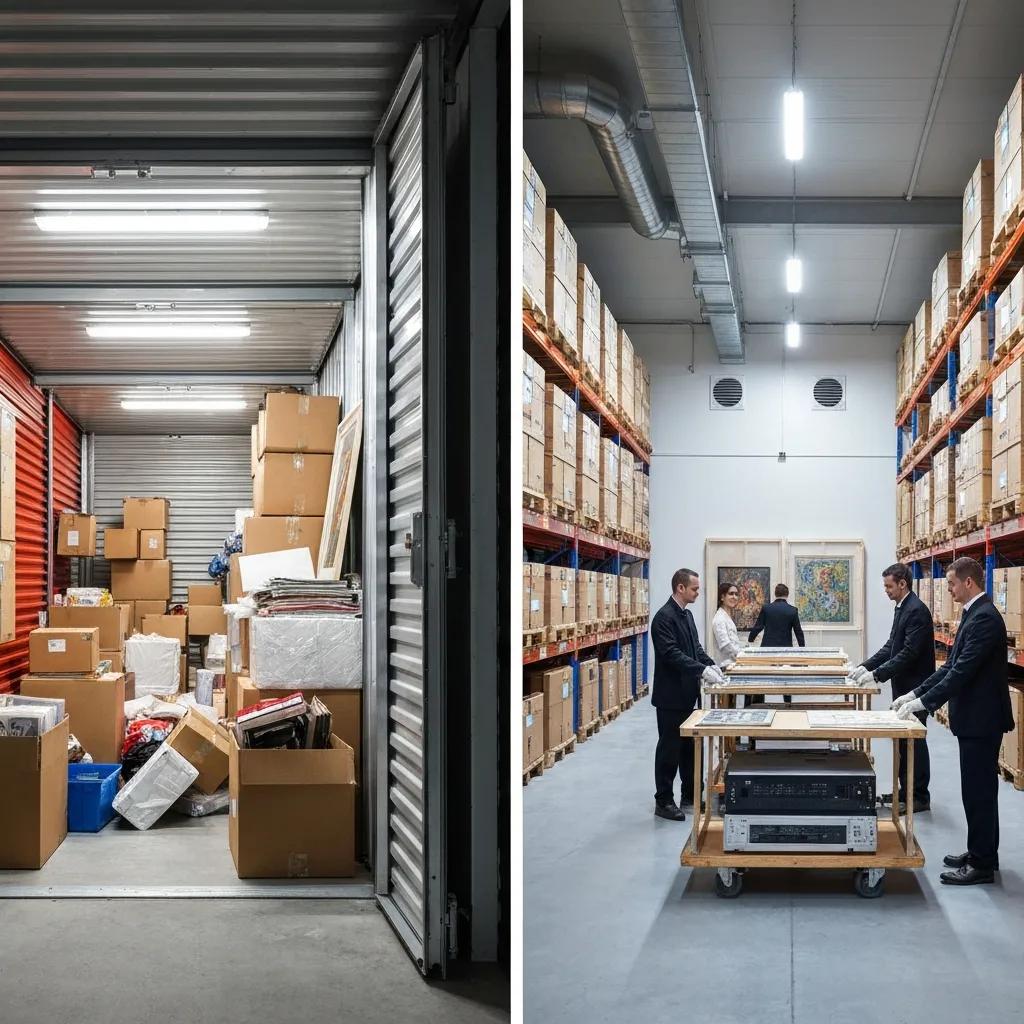
Self-storage units provide customer-level access and a range of unit sizes, making them convenient for frequent retrieval and lower-cost needs. Warehouse storage, especially climate-controlled warehouses, emphasizes environmental stability and professional inventory handling, which minimizes risk for delicate or valuable items during extended retention. Portable containers deliver convenience for moves and renovations but may lack the continuous environmental controls and security found in warehouses. Consider self-storage for seasonal gear, a climate-controlled warehouse for heirlooms and electronics, and portable containers for transitionary needs that prioritize convenience over preservation.
What Makes Climate-Controlled Storage Essential for Sensitive Items?
Climate control maintains consistent temperature and humidity ranges that prevent mold growth, wood warping, and electronic corrosion during extended storage. Sensitive categories include hardwood furniture, canvases and framed artwork, paper records and photographs, and consumer electronics; each can suffer irreversible damage from fluctuating environmental conditions. Choosing a climate-controlled warehouse reduces chemical degradation, pest attraction, and mechanical stress on materials and thus preserves resale value and sentimental integrity. For these reasons, climate-controlled warehouse storage is the recommended option for long-term preservation of sensitive and high-value belongings.
How Can You Prepare Your Belongings for Extended Storage?
Proper preparation reduces risk of damage and makes retrieval easier when you end a storage period. Start by cleaning, fully drying, and disassembling items when possible; then use appropriate packing materials and document everything with photos and an inventory. The steps below outline a practical, repeatable workflow that minimizes deterioration risks and simplifies claims or retrieval later.
- Clean and Dry Items: Remove dirt, oils, and moisture to prevent mold and stains during storage.
- Disassemble and Protect: Take apart large items, pad corners, and wrap wood in breathable covers to allow airflow.
- Use Rigid Containers: Prefer sealed plastic bins for documents or fabric items and sturdy boxes for stacked goods.
- Add Moisture Control: Place desiccant packs or moisture absorbers inside containers to control humidity.
These steps help prevent common storage problems. The next table lists recommended packing materials and the role each plays in preserving items during long-term storage.
| Packing Material | Role | Best For |
|---|---|---|
| Acid-free paper | Protects documents and artwork | Paper records, prints |
| Bubble wrap | Shock absorption | Electronics, fragile decor |
| Furniture blankets | Surface protection | Sofas, tables, cabinets |
| Sealed plastic bins | Pest/moisture barrier for boxed goods | Linens, seasonal clothing |
Use these materials selectively based on item sensitivity. Thorough preparation plus climate control and secure storage combine to give the best long-term outcomes.
What Are the Best Packing Materials and Techniques for Long-Term Storage?
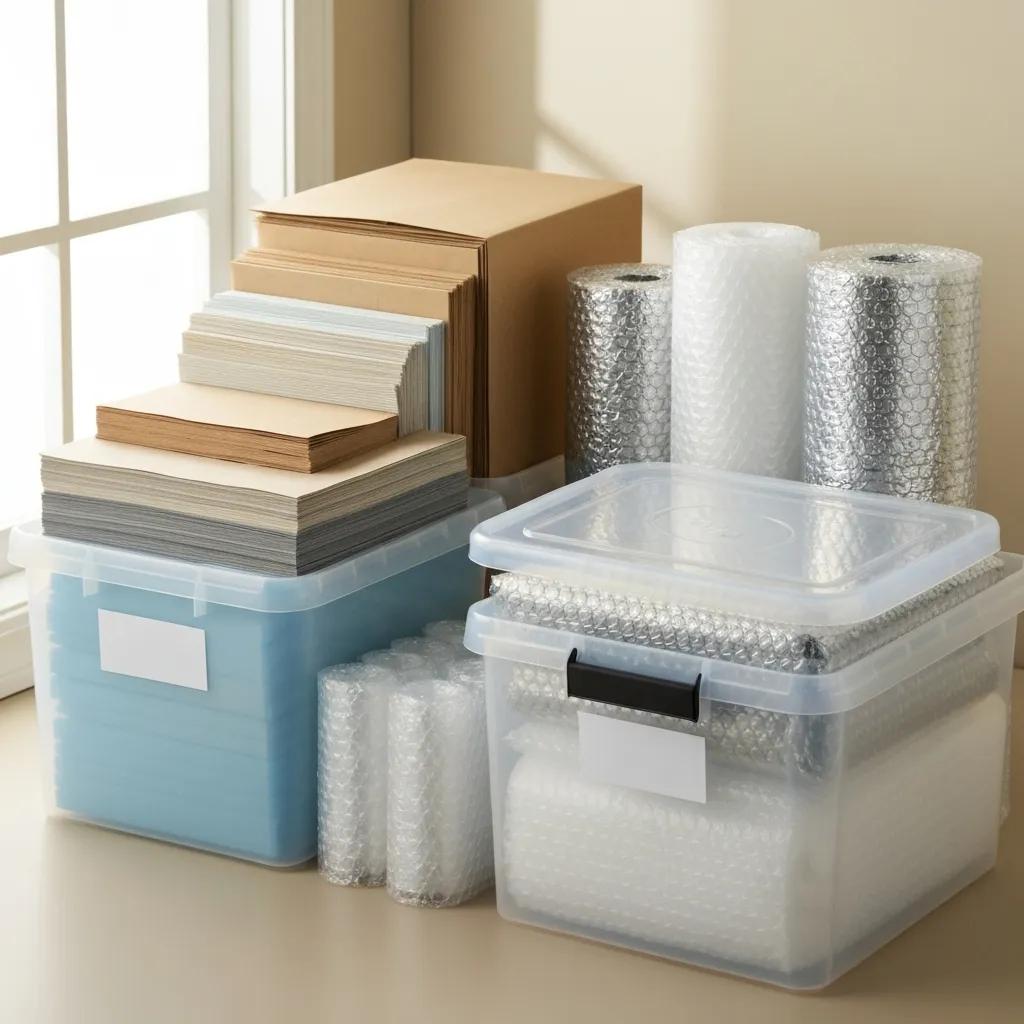
Choose materials that match the preservation needs of each item: acid-free interleaving for paper, breathable furniture covers for hardwood, and anti-static wrap for electronics. Disassemble large furniture, cushion joints, and avoid plastic sheeting directly on wood to prevent trapped moisture. Label boxes clearly and include a short condition note on each one to track pre-storage state. These techniques reduce handling damage and simplify later inspections or retrieval.
How Should You Create and Manage an Inventory for Stored Items?
Create a digital inventory that pairs item descriptions with photos, condition notes, and a unique ID for each box or pallet to speed retrieval and support insurance claims. Store a backup copy offsite or in cloud storage and update the inventory if you add or remove items. Organize items by storage location (unit number or bay) and include a simple contents list on each box. This system reduces uncertainty and helps you locate items quickly when needed.
What Key Factors Should You Consider When Choosing a Long-Term Storage Facility?
Selecting a facility requires evaluating security, environmental controls, location logistics, insurance options, and contract terms to balance preservation and convenience. Assess security features like surveillance and access control, verify monitoring for climate systems, understand hours and access policies, and confirm what insurance is offered or required. Below is a short decision checklist to guide assessments and a table comparing common facility attributes.
- Security features, monitoring, and access controls
- Climate control and environmental monitoring practices
- Insurance coverage options and required documentation
- Transparent pricing, contract length, and access policies
This checklist helps prioritize must-have features for long-term storage. The table below summarizes facility attributes and what to ask about each when comparing providers.
| Facility Attribute | What to Ask | Why It Matters |
|---|---|---|
| Security system | CCTV, gated access, staffing | Reduces theft and vandalism risk |
| Insurance options | Facility vs. third-party coverage | Determines claim processes and exclusions |
| Contract terms | Minimum term, auto-renewal, notices | Affects flexibility and costs |
| Access hours | 24/7 vs. scheduled access | Influences convenience for retrievals |
How Do Security Features and Accessibility Impact Storage Choice?
Security features like CCTV, gated access, good lighting, and on-site staff reduce theft and support insurance eligibility, which protects stored items and owner peace of mind. However, facilities with highest security sometimes restrict access hours or require appointments, creating a convenience trade-off. Evaluate how often you will need access and whether professional handling matters more than frequent retrieval. Aligning security level with your access needs optimizes both protection and usability.
What Are the Typical Pricing, Insurance, and Contract Options?
Pricing often depends on unit size, climate control, and access level; climate-controlled units typically cost more but reduce risk for sensitive goods. Insurance options vary: some facilities offer limited liability coverage while many recommend third-party insurance for full-value protection. Contract terms can include minimum commitments, auto-renewal clauses, and notice periods for termination; clarify these before signing. Comparing these elements side-by-side helps you choose a reliable storage company that matches preservation needs and budget.
Why Choose T&E Moving and Storage LLC for Your Long-Term Storage Needs in Jacksonville, FL?
T&E Moving and Storage LLC is a Jacksonville-based moving company that explicitly offers climate-controlled warehouse storage and integrated moving-and-storage services, providing a combined workflow for customers who need both transport and extended storage. The company also lists senior relocation services, junk removal, and operation as an interstate freight carrier authorized for household goods, indicating a scope that covers local moves and long-distance logistics. For Jacksonville residents seeking climate control and professional handling, T&E’s climate-controlled warehouse storage is positioned as the facility option to consider for sensitive or long-retained items.
- Climate-controlled warehouse storage: protects against humidity and temperature swings
- Integrated moving and storage services: reduces logistical steps for customers
- Local Jacksonville focus plus interstate freight authorization: supports both local and long-distance moves
These points summarize T&E’s stated offerings and value propositions. If you want to explore coordinated moving and long-term storage, requesting a consultation with the company can clarify how their climate-controlled warehouse and moving services align with your preservation needs.
What Are the Unique Benefits of T&E’s Climate-Controlled Warehouse Storage?
T&E’s climate-controlled warehouse storage is presented as a place to keep temperature- and humidity-sensitive items stable over extended periods, reducing mold risk, warping, and corrosion. For valuables such as hardwood furniture, framed art, electronics, and paper records, the warehouse environment helps maintain condition and value while items are out of active use. Positioning this type of storage alongside professional handling minimizes the chances of environmental or handling-related damage. These protective outcomes align with best practices for long-term preservation of household goods.
How Does T&E’s Integrated Moving and Storage Service Enhance Convenience?
Offering both moving and storage services allows customers to consolidate logistics: movers load and transport items directly into climate-controlled warehouse space, eliminating multiple handoffs or coordination steps. This integrated approach is particularly helpful during downsizing, renovations, or relocations when timing and storage overlap. By combining moving and long-term storage under one provider, customers can reduce friction, streamline scheduling, and simplify inventory handoffs without arranging separate transport and storage vendors.